
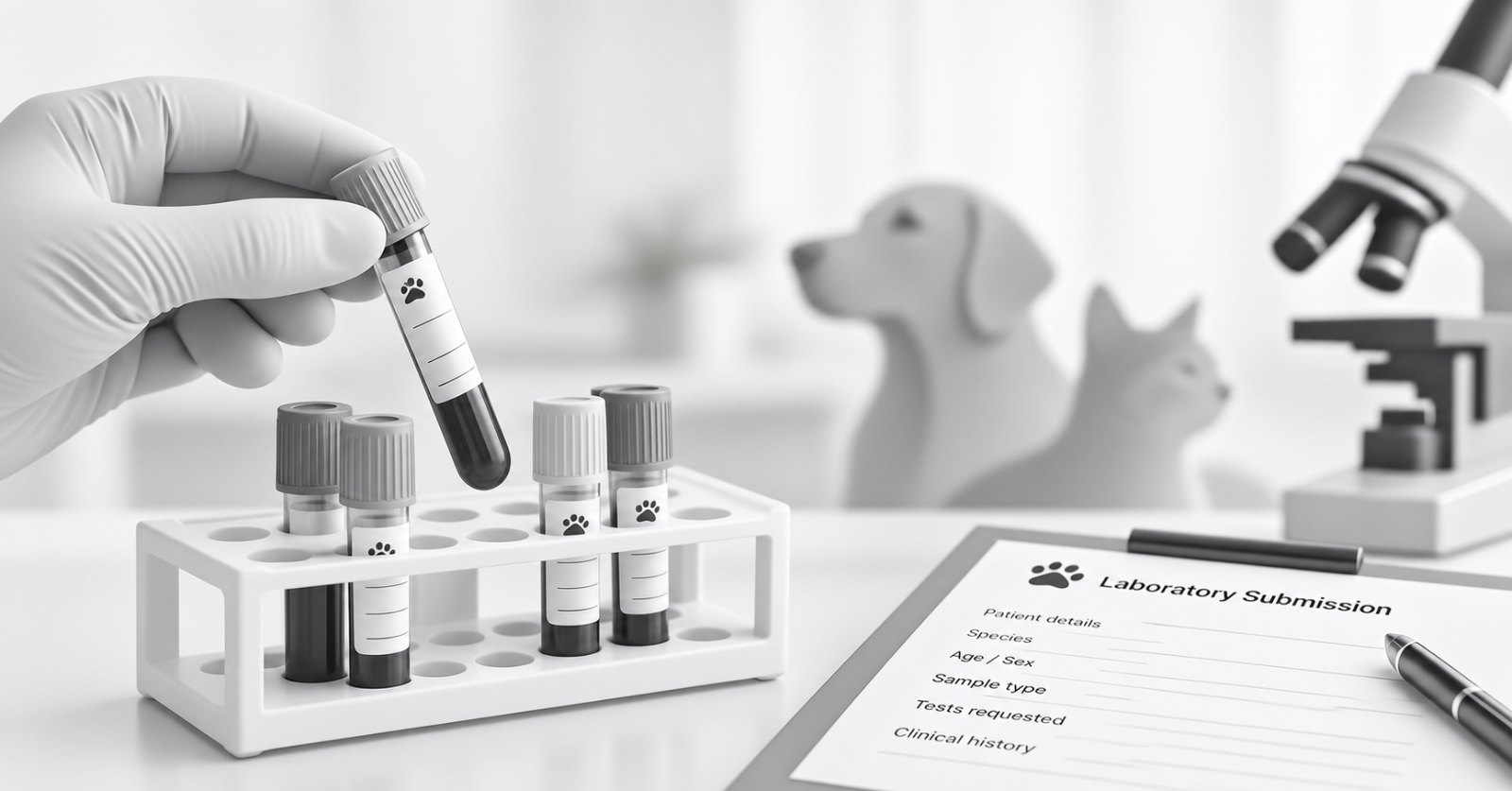
A request for another blood sample can mean the original specimen cannot reliably answer the veterinarian's question. It does not, by itself, show that an animal's illness has worsened. Ask which test was affected, what limitation was found and whether a fresh sample is needed for the next clinical decision.
What does a sample-quality comment mean?
Haemolysis means red blood cells have broken down. Handling and processing can contribute, and some tests may be affected. Lipaemia describes a sample affected by increased blood fats; its significance depends on the investigation. A quality flag and an abnormal test value are different pieces of information.
Cornell's clinical chemistry guidance describes sample interference and the importance of medication history. The veterinarian should read the report's comments alongside the clinical findings, rather than interpret the flag alone.
Why might the laboratory ask for another collection?
Possible limitations include an unsuitable specimen type, insufficient usable material, a damaged or poorly preserved sample, or identification that needs clarification. Not every limitation affects every requested test in the same way.
The Merck Veterinary Manual's submission guidance explains why correct tube filling, processing and storage matter. Requirements vary by test and species. Follow the receiving laboratory's instructions for the specific investigation.
A useful conversation starts with: “Which result can still be interpreted, and which question remains unanswered?” That helps the veterinarian decide whether recollection would add useful information.
What should a clinic confirm before recollecting?
Use a short handover note:
- Record the animal's identifier, requested tests and the laboratory's reason for requesting another specimen.
- Confirm specimen type, tube additive, required volume, processing and transport instructions before collection.
- Include collection time, relevant treatment history and the clinical question.
- Check that the label on every container matches the submission information.
- Confirm what should happen to any remaining material from the first collection.
Cornell's tube and labeling guide distinguishes whole blood, serum and plasma and stresses identification of transferred specimens. Another laboratory's guide is useful background; it should not replace the instructions for a submission to eLAB.
What can a pet owner do?
Ask the clinic to explain the reason for the repeat visit and the preparation required. Do not change medicine or withhold food on your own. Bring the previous complete report, rather than only a screenshot of highlighted values.
For a planned eLAB submission, the referring clinic can use information for veterinarians and contact the laboratory on 1800 889 1900 to confirm arrangements. This guide does not establish which tests eLAB currently offers.
For help understanding the separate question of what blood-cell measurements mean, read our CBC report guide.
Frequently asked questions
Does a rejected sample mean the test was positive?
No. A specimen limitation is not a positive disease result. Ask what could and could not be reported.
Must every haemolysed sample be repeated?
There is no single rule for every investigation. The veterinarian and laboratory should decide whether the affected specimen can answer the requested question.
Should my pet fast before the repeat collection?
Follow the veterinarian's specific instructions. Preparation must account for the tests requested and the animal's condition.
Can the original report still be useful?
Possibly. Keep it for the veterinarian, including comments and any reported results. Ask which findings remain usable and whether the repeat sample is intended to confirm or complete the investigation.