
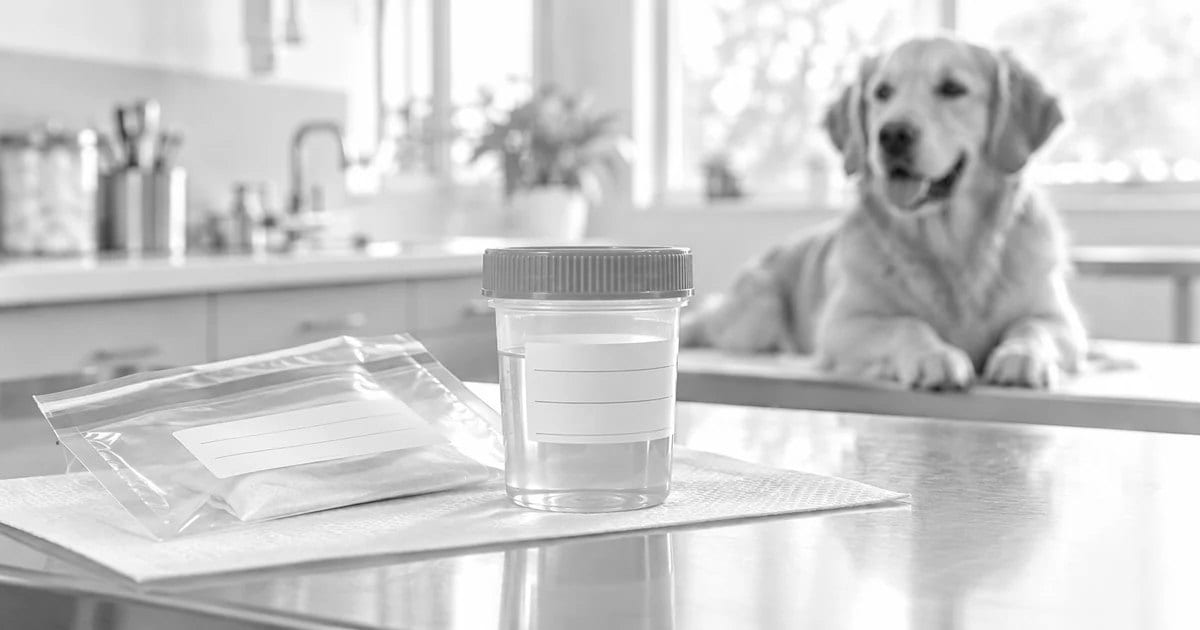
A useful urine sample starts with the right instructions. Ask your veterinarian which investigation is needed, how the urine should be collected, and how quickly it must reach the laboratory. A sample suitable for one test may not be suitable for another.
What can a urine test tell the veterinarian?
Urinalysis examines several aspects of urine, including its concentration, chemical findings and material visible under a microscope. It can add information to an investigation of urinary or kidney problems. Cornell’s urinalysis guidance explains why urine findings can be important alongside blood chemistry results.
A urine report does not replace examination of your pet. The question is how the findings fit the symptoms and other results, rather than whether one number is highlighted.
Can I collect the sample at home?
Sometimes, if the veterinarian requests a naturally passed sample. Other investigations may require collection by the clinic. Do not attempt catheterisation or needle collection yourself.
Before trying at home, ask:
- Is home collection suitable for the requested test?
- Which container should I use?
- How much is needed?
- Should it be taken to the clinic immediately?
- What should I do if there will be a delay?
Use the container and handling instructions provided by the receiving clinic or laboratory. Do not transfer urine from a floor, litter tray or household cleaning container without first discussing suitability.
What details should go with the sample?
Record the animal’s identification, species, collection date and time, and collection method. Make sure the container and request form describe the same animal. Tell the clinic about any collection difficulty or delay.
Keep a simple submission note: “Dog; naturally passed sample; collected at 8 am; delivered at 9 am.” Add the information actually known rather than estimating an earlier collection time.
Why does freshness matter?
Urine can change after collection, and storage can affect interpretation. The Merck Veterinary Manual describes how delayed examination and cooling may affect findings such as crystals. Ask the receiving laboratory for its test-specific instructions rather than adopting a storage rule from a different laboratory.
Avoid adding water, disinfectant or preservative unless specifically instructed. Report any accidental addition.
What should I ask when the result arrives?
Ask what investigation was performed and whether a separate culture or follow-up test is needed. Check that the animal’s details and collection method are correct. Keep the full report, including laboratory comments, for the veterinarian.
For submissions in Kochi, use eLAB’s information for veterinarians or call 1800 889 1900 to confirm current test availability and specimen requirements.
Frequently asked questions
Is clear-looking urine always normal?
No. Appearance alone cannot establish urinary health. The veterinarian may still need laboratory findings and examination.
Can the same sample be used for culture?
Ask first. Collection and handling requirements depend on the investigation; a routine sample is not automatically appropriate for culture.
Should I freeze the sample?
Only if the receiving laboratory explicitly requests it for the particular test. Confirm instructions before storage.
Is a urine test enough to diagnose kidney disease?
It provides useful information, but interpretation may also require blood results, history and other investigations.