
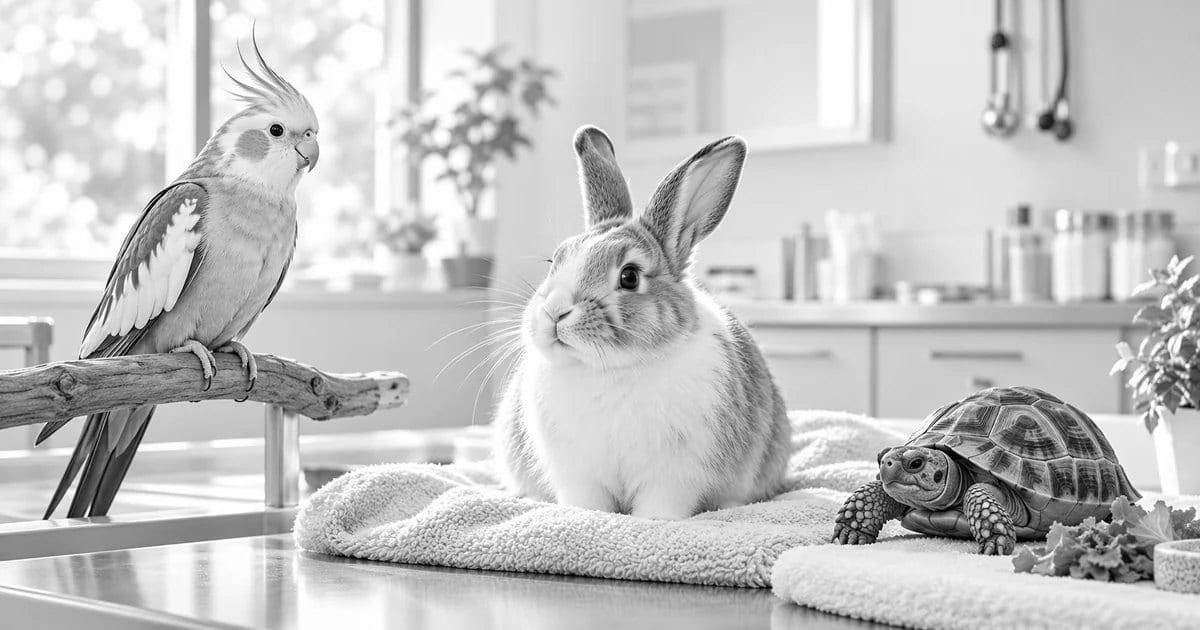
An exotic-pet laboratory investigation needs the animal’s exact species, clinical history and a sampling plan chosen by a veterinarian. Birds, rabbits and reptiles should not all be treated as one laboratory category. The useful first question is what the investigation needs to explain for this particular animal.
Why does species identification matter?
Write the species as accurately as possible on the submission form. “Bird” or “reptile” gives much less information than the species name. If identification is uncertain, say so and ask the veterinarian to confirm it.
For birds, the Merck Veterinary Manual describes species differences in blood findings and the importance of body weight and health when planning collection. Those decisions belong to the treating veterinarian, not a home sampling checklist.
Do not compare the report with a dog’s, a cat’s or a different exotic species’ reference values.
What history should an owner bring?
Build a short timeline for the consultation. Include when the animal was acquired, when the change was noticed and what has happened since. Bring previous reports and a current medication list.
Record relevant husbandry information:
- Usual diet and any recent changes.
- Housing, bedding and cleaning routine.
- Contact with other animals.
- Recent transport or changes in the household.
- Changes in activity, appetite or droppings.
Photographs of the enclosure and a short video of the behaviour can help communicate what happens at home. Merck’s bird guidance specifically includes cage conditions, diet and exposure in the history.
Should I collect a sample before the appointment?
Ask first. Do not attempt blood collection or another invasive procedure at home. Even apparently simple specimens need a clear purpose, correct identification and handling instructions.
If the clinic requests a non-invasive sample, ask for the container, amount, collection window and transport plan. Keep specimens from different animals separate unless a veterinarian requests a defined group sampling plan.
For rabbits, Merck’s routine care guidance emphasises veterinary examination and observation of changes such as eating, activity and droppings. Laboratory testing should support that assessment.
What questions should accompany the report?
Ask which reference intervals were used and whether the sample was suitable. Discuss how the result fits the examination and husbandry history. A result marked abnormal should not be used alone to select treatment.
Keep the complete report available for the veterinarian. Record any follow-up plan, including whether another specimen or a different investigation is needed.
Before sending a specimen to eLAB Diagnostics, the veterinarian can use the submission information or call 1800 889 1900 to confirm whether the requested species and investigation can be accommodated.
Frequently asked questions
Can I use a dog or cat’s normal range?
No. Ask the veterinarian about the appropriate interval for the species and reporting method.
Does every exotic pet need the same blood panel?
No. The clinical question, species and animal’s condition guide the investigation.
Should I fast my bird, rabbit or reptile before testing?
Follow species-specific instructions from the treating veterinarian. Do not apply a general fasting rule yourself.
Can I send samples without a veterinary consultation?
Contact the clinic and laboratory first so the intended investigation and safe collection plan are clear.