
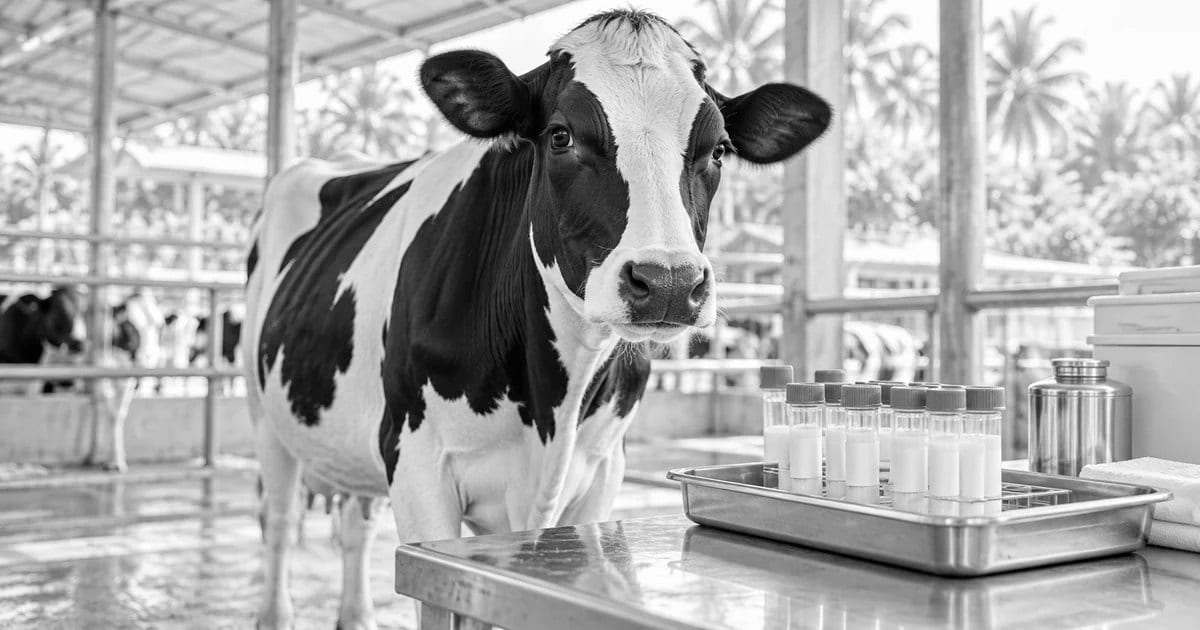
For a mastitis investigation, decide what question the milk sample should answer before collecting it. Identify the cow and affected quarter, confirm the requested investigation with the veterinarian, and follow the receiving laboratory’s collection instructions.
Should quarters be sampled separately?
A quarter sample retains information about its origin. Mixing milk from several quarters changes the question the laboratory can answer.
The Wisconsin Veterinary Diagnostic Laboratory’s milk sampling guidance explains that composite samples can produce mixed growth which is difficult to separate into infection and contamination. It advises avoiding composite samples for most mastitis culture investigations except particular screening purposes.
That does not mean every herd-monitoring project needs the same specimen. The veterinarian and laboratory should agree the sampling plan for the intended investigation.
Why is contamination such a concern?
Bacteria can enter the specimen from the collector’s hands, the environment or the teat surface. WVDL identifies careful collection as important for avoiding contamination.
Use the laboratory’s current written technique, suitable containers and trained personnel. This checklist is for planning and identification; it does not replace a farm’s veterinary collection protocol.
Ask before collection whether the investigation needs individual-quarter samples, another sample type or a different test. Keep the clinical investigation separate from milk-quality or regulatory testing requirements.
What should be on the label?
Choose an identification system that someone outside the farm can understand. For an individual-quarter sample, record the cow’s identity and quarter clearly, using an agreed notation.
Match every container to the request form. Include:
- Farm or herd identifier.
- Cow identification.
- Quarter or exact sample source.
- Collection date and time.
- Clinical signs and the veterinarian’s question.
- Relevant treatment information provided by the clinic.
If more than one cow or quarter is involved, use a written sample list and check it against the containers before packing.
How should transport be arranged?
Confirm the receiving laboratory’s timing and temperature requirements before sampling. Decide who will collect, who will package, and when the courier or clinic handover will occur.
Record delays or departures from the instructions so the laboratory can assess suitability. Do not add preservatives or freeze the sample unless instructed for that investigation.
Keep submission paperwork protected from spills. A correctly collected specimen still needs a readable identity at arrival.
What should happen after the result?
Review the specimen source and any comments with the herd veterinarian. Ask whether the result answers the original question and whether another sample is needed. Treatment, milk withdrawal and herd management decisions belong within the veterinary plan.
For an eLAB enquiry in Kochi, see information for veterinarians or call 1800 889 1900. Confirm the exact investigation and current availability before collection.
Frequently asked questions
Can I mix samples from different cows?
Only under a sampling plan agreed for that purpose. Mixing removes individual identification and is not a substitute for separate clinical specimens.
Is bulk-tank milk the same as a sample from an affected quarter?
No. They represent different sources and answer different questions.
Should I collect after starting treatment?
Ask the treating veterinarian how to plan collection; do not delay necessary care yourself.
Does a culture result alone determine treatment?
No. The veterinarian interprets it with clinical and herd information.